Brisbane’s subtropical climate throws everything at your garden: steamy summers, surprise storms, and then weeks without a drop of rain. And most plants need constant attention just to survive these swings.
Low-maintenance plants handle this chaos without you spending every weekend watering, feeding, or fussing over them. They’ve adapted to our weather patterns, so your outdoor space stays green whilst you actually enjoy it. Down the track, choosing the right species means less work and more time relaxing in your tropical garden.
At designmartus.com, we help Brisbane gardeners select plants that suit their soil and sun conditions. That means we know which ones work in our region, and we’ll share that insight here.
In this guide, we’ll cover native options, drought-tolerant choices for free-draining soil, screening plants, and care basics. You’ll learn which options grow well here with minimal attention.
Keep reading to find plants that make gardening easier.
Why Low-Maintenance Plants Work in Brisbane’s Climate
Low-maintenance plants suit Brisbane because they cope with our wet summers and dry winters without constant care.
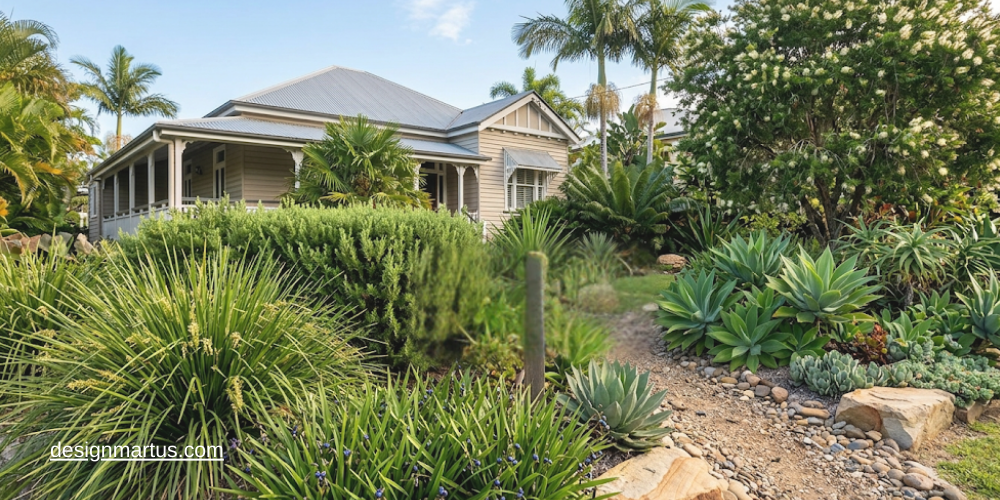
Our subtropical weather creates a challenge. It swings between heavy rainfall during the warm months and bone-dry stretches that leave your soil cracked. During those storms, free-draining soil prevents root rot by draining fast, but it dries out quickly once the sun returns.
Native and water-wise species have evolved to survive these extremes. When rainfall disappears for weeks, these plants keep going, while others shrivel up. They don’t need the babying that varieties from cooler climates demand. Honestly, they’re built for this kind of punishment.
In short, drought-tolerant plants save you time because Brisbane’s weather does the hard work of weeding out anything that can’t tolerate the heat and the dry spells.
Native Plants That Handle Brisbane’s Climate
The best part about native plants is that they’ve already adapted to Brisbane’s soil and weather patterns. Once established, they need almost no water from you. From what we’ve seen across dozens of Brisbane projects, these shrubs cope with everything our region throws at them.
For ground cover, Lomandra varieties offer strappy green leaves that stay lush year-round in full sun or part shade. Brisbane gardeners love them because they tolerate both wet feet during storms and dry spells without complaint.
Another solid pick is Dianella, which produces small blue flowers that bring bees and birds into your garden, then follows up with bright berries. It handles part shade beautifully and adds colour without fuss.
When you need screening or borders, Westringia, or coastal rosemary, forms dense hedges with tiny pink or cream flowers. It copes with coastal gardens and inland sites equally well and doesn’t need your weekend attention to survive.
But if you’re working with spots that stay bone-dry most of the year, water-wise species manage those conditions even better.
Drought-Tolerant Plants for Free-Draining Soil
Drought-tolerant plants survive in free-draining soil because they store water efficiently and send roots deep. If your site dries out fast after rain, these tough species handle weeks without a drop.
The best options fall into two categories: succulents that store moisture and grasses that add texture.
Succulents and Agaves That Handle Heat
Succulents are the easiest choice for hot, dry spots because they store water in their leaves. For example, Agave attenuata grows in clumps with thick, fleshy foliage that survives weeks without rain. These water-wise plants manage full sun and poor soil without complaint.
Aloe varieties work equally well in garden beds or pots, making them suitable for containers when ground space runs out. Their roots spread shallow but wide, grabbing moisture before it drains away.
While Echeveria and sedum groundcovers grow across rocky areas with minimal effort, they fill gaps where other plants struggle. Once you establish these varieties, checking their water needs becomes rare.
Ornamental Grasses for Texture
Looking for plants that add softness without needing constant attention? Then ornamental grasses are worth considering as they deliver texture and movement with low maintenance.
These species work differently:
- When you need year-round green, Lomandra longifolia creates flowing stems that tolerate both wet feet and extended dry periods, working in part shade or brighter spots.
- Poa labillardieri, or tussock grass, adds soft texture to slopes and suppresses weed growth at ground level once it matures.
- Sometimes you want height alongside movement, and purple fountain grass brings colour and vertical interest to garden space while handling part shade beautifully.
Unlike thirsty varieties that demand attention, these plants survive on neglect and still look vibrant.
Screening Plants That Need Minimal Care
Let’s start with the most reliable option. Lilly pilly varieties grow thick screens with minimal effort, producing small pink or cream flowers that add colour without fuss. In practice, they only need occasional shaping to maintain height.
Moving to trees that offer more height, the Tuckeroo provides glossy green leaves and manages coastal conditions. This makes it an excellent choice for exposed sites.
And when you want fragrance alongside privacy, murraya hedges produce white flowers with a scent similar to orange blossom. Plus, they tolerate shady spots and Brisbane’s summer humidity without disease issues.
For a softer look, ornamental palms create height and texture in borders whilst needing almost no care. Lavender works well for low borders, bringing vibrant purple colour and attracting pollinators.
Worth Noting: While these screening options give you privacy without eating up your weekends, they still need water during their first few months in the ground.
What About Watering and Fertilising?
Most low-maintenance plants only need watering during the first two months, then they survive on rainfall alone. But initially, newly planted specimens need regular water for the first 6-8 weeks until roots spread into the surrounding soil and settle properly.
After roots establish, most species only need watering when dry spells last over two weeks. The soil type is important here because free-draining sites dry out faster than clay-based ground. So check your soil drainage before deciding on a watering schedule.
Helpful Tip: Reduce watering during autumn and winter since cooler temperatures and occasional frost slow plant life down.
In our experience, native species generally don’t require feeding. But a light native plant feed in spring helps growth if your soil lacks nutrients. Before adding fertiliser, test how your plants perform without it for the first year.
Get Your Garden Sorted
Choosing the right plants makes gardening easier and gives you more time to enjoy your outdoor space. Start with a few low-maintenance plants in problem areas where nothing else seems to grow well. Then expand to other parts of your garden once you see how little attention they need.
Design Martus helps Brisbane gardeners select species that suit their specific soil and sun conditions. We enhance gardens across the region with plants that tolerate our climate without constant maintenance.
Contact us for landscaping advice customised to your garden, and let’s get it sorted.